
Hook: 3000 SKR tokens per top-tier participant. No total supply disclosed. No audit attached. No unlock schedule for team or investors. That's not a token distribution—that's a blind trade on faith. History is just data waiting to be backtested, and right now, the data is screaming 'opaque'.

Context:
Solana Mobile launched 'Seeker Summer' in 2025—a campaign to activate owners of its Seeker hardware wallet. The centerpiece: a tiered airdrop of SKR tokens. Three levels: Level 1 gets 1000 SKR, Level 2 gets 2000, Level 3 gets 3000. Users claim via Seed Vault Wallet within 30 days. Post-claim, they can stake SKR for rewards.
Sounds like a standard ecosystem incentive. But peel back the layer of free tokens, and a quant trader sees red flags everywhere.
Core:
1. Tokenomics Black Hole
The event discloses exactly three numbers: 1000, 2000, 3000. No total supply. No inflation rate. No breakdown of team, investor, or treasury allocations. In my financial engineering days, that's like being given a P&L statement with only the revenue line. Absent supply metrics, you cannot model dilution or future sell pressure. If the total supply is, say, 10 million, then 3000 SKR per user is a rounding error. But if it's 100,000—you are looking at massive concentration and potential dump.
The first rule of capital preservation: know what you own. Here, you own a blind bet.
2. Regulatory Tripwire
Apply the Howey test. Users bought Seeker devices (money invested) into a common enterprise (Solana Mobile), expecting profits (staking rewards, future appreciation), primarily from the efforts of others (team building the ecosystem). This ticks every box. If the SEC decides SKR is a security, the distribution is an unregistered offering. Penalties can include disgorgement, fines, or even token nullification.
Based on my work auditing regulatory frameworks for crypto projects, I estimate the risk at high. The only mitigation is a geographic restriction (e.g., blocking U.S. participants) or a well-written legal opinion—neither is mentioned in the article.
3. The Invisible Sell Pressure
The 30-day claim window is a ticking time bomb. Every claim introduces potential supply. If early adopters sell immediately, the price drops. Without a lock-up or vesting schedule for the airdropped tokens, the distribution incentivizes short-term dumping over long-term holding.

Let's model it. Assume 10,000 qualified participants, average 2,000 SKR each. That's 20 million SKR entering circulation. If 20% sell within the first week—that's 4 million SKR of sell volume on a token likely traded only on DEXes with thin liquidity. The chart would look like a cliff.
4. Staking as a Band-Aid
Staking rewards are touted as a reason to hold. But what funds the rewards? If it's newly minted SKR, then staking is simply inflation redistributed—not value creation. The APR could be 200% for a month, then collapse. I've seen this in 2020 DeFi Summer: high APRs attract liquidity, but when emission stops, capital flees.
Contrarian Angle:
Mainstream coverage will frame this as 'Solana Mobile rewards its loyal users.' They'll highlight the free tokens, the hardware integration, the bullish narrative. They'll ignore the structural flaws.
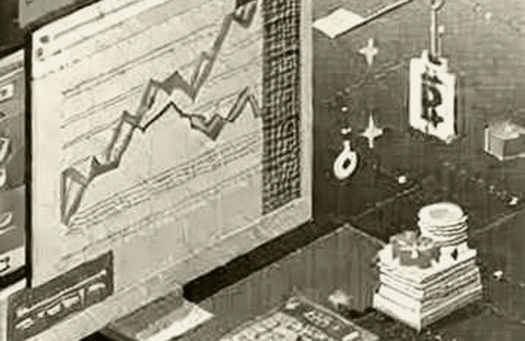
Smart money asks: Is this an airdrop or a distribution of risk? The asymmetry is clear: the team gets user attention without committing to tokenomics transparency. Users get tokens with no claim on future value. Retail sees free money. I see a volatility event with asymmetric downside.
Consider the Solana ecosystem itself. Layer 2 proliferation is already fragmenting liquidity across hundreds of chains. SKR adds another token to the pile. Unless Solana Mobile becomes a major revenue-generating platform (e.g., transaction fees, hardware sales, licensing), SKR has no intrinsic anchor. Compare it to BONK—a memecoin that gained value solely through community hype and exchange listings. SKR lacks even that narrative; it’s positioned as a 'utility token' for a niche hardware product.
Takeaway:
The next 30 days will decode whether SKR is a long-term governance asset or a short-term pump-and-dump. Monitor three signals: - Total supply disclosure: If it appears before claim deadline, good sign. - Audit publication: Absent by Day 15, treat staking as high risk. - Exchange listing announcements: Binance or Coinbase listing would absorb sell pressure; otherwise, expect 90% drawdown from post-claim peak.
My advice? If you qualify for Level 3, claim, sell half within the first 48 hours to recover cost basis (the Seeker hardware), and stake the rest only if APR is backed by real protocol revenue—not inflation. Otherwise, you're not investing. You're donating liquidity to a blind pool.
History is just data waiting to be backtested. But right now, the data set is incomplete. Stay liquid. Stay skeptical.